Ripp(ing) Away Attention
A throwaway comment from Matt Damon about how Netflix writes movies now explains the job of anyone making content for a screen.

This one came to me while I was watching Matt Damon and Ben Affleck make the press rounds for their Netflix movie The Rip. Sitting with Joe Rogan, Damon joked about how the writing process has changed. Netflix wants a big action sequence in the first five minutes, and there are conversations about restating the plot three or four times in the dialogue, because a lot of the people watching are looking down at their phones. Affleck pushed back a little, pointing to Adolescence as proof you don't have to play it that way. Either way, they made sure the movie never lost its direction while still making a really good one.
First, if you haven't seen The Rip: really good action movie. On a scale of "I put my phone down," I give it a 7.8 out of 10.
What got me was how much Damon's comment crystallized something I think about every day. Whatever is on the screen you're looking at has to be more compelling than it's ever had to be. The main screen is afraid of the little screen. And the little screen is afraid of the main screen, because it would be a real shame to miss those six push notifications that come through every 10 minutes.
Let me be clear: I love all forms of media. I obsess over anything content-related. When I work, the TV is on in the background. When I'm watching a Niners game, I'm on Twitter looking at highlights from the other games. I can't get enough of it. But when it comes to digital and social media, you have to remember that everybody is competing against everybody. When you're making content, whether it's a simple meme post or a full-blown digital series, you have to keep the whole ecosystem in mind, not just the one you're programming for.
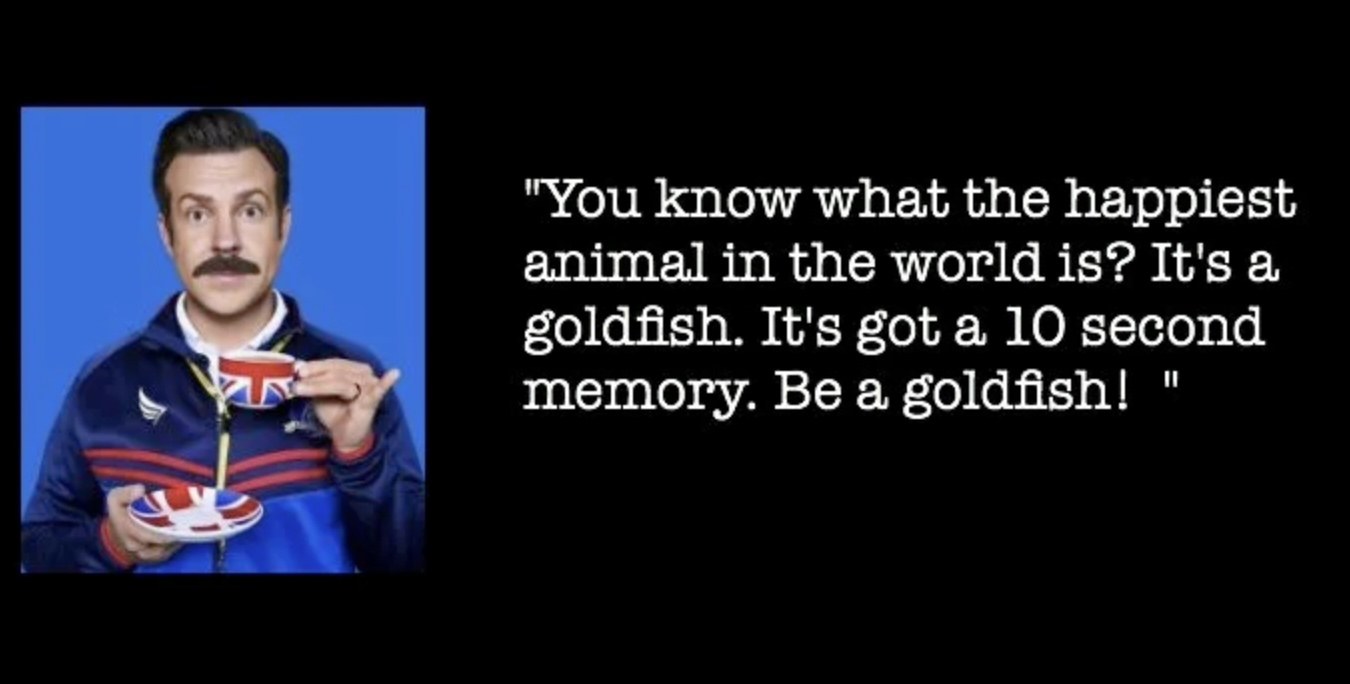
To pull in one more big-screen example, Ted Lasso once told a player to "be a goldfish," because a goldfish has a 10-second memory. He meant it as a way to shake off a mistake. I'd borrow it the other way around and assume your audience is the goldfish. That's the lens you need for everything from ad campaigns to organic posts to long-form YouTube.
Three people worth your time
A few people have laid this out better than I can. Here's where I'd start.
- Malcolm Gladwell on stickiness. In The Tipping Point, Gladwell gives a whole chapter to why some messages stick, and a big part of it is Sesame Street and Blue's Clues. Nick Jr. famously aired the same Blue's Clues episode five days in a row, and kids who sat quietly on Monday were shouting the answers by Friday. Netflix's "say the plot three times" note has a smarter, older cousin. Repetition works when each pass gives people something new to catch.
- MrBeast's production memo. When Jimmy Donaldson's guide for new staff leaked in 2024, it read like a retention manual. The first minute gets the most effort because that's where the most people leave. Then the memo plans "re-engagements" around the three- and six-minute marks, moments big enough to pull a wandering viewer back in. It's the same note Damon got from Netflix, from a guy making videos for the little screen.
- Gary Vaynerchuk on day trading attention. Gary's been saying it for years: don't fall in love with a platform, follow where people's attention actually is and go there. At The Drum Live in 2024 he was blunter: "If you don't have attention, it doesn't matter what you say." Programming for one screen while ignoring the one in their hand is exactly what he's warning against.
Earning the next few minutes
Restating the plot three times sounds like dumbing it down. Done well, it's what a good host does when a friend shows up late to the party: catch them up without stopping the music. Your audience is going to look away. The group chat goes off, a notification lights up their wrist, the Niners get into the red zone. Life happens, but our jobs as content creators and marketers are to make sure that what we're putting out in the world will be valuable enough that these all-too-precious seconds are yours for the taking. The job is to make the thing in front of them worth looking back at, and easy to pick back up when they do. Hook them early, give them a way back in, and make every few minutes earn the next few.
What's the last thing that actually made you put your phone down? Tell me: bryce@powellstreetmedia.com.
See you next week.